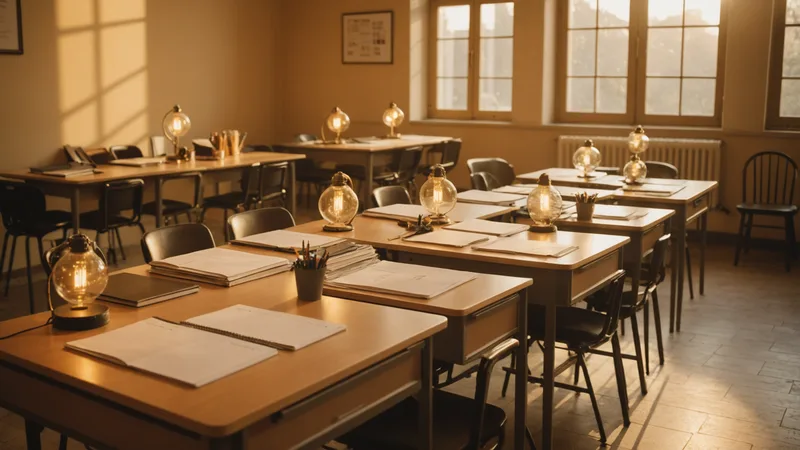
Back-to-school night has a particular way of arriving at the worst possible time. The first two weeks of school are already the most mentally dense of the year: you are learning 28 new names, calibrating your classroom management approach, discovering which students need immediate attention, and doing all of it while setting up routines that will define the rest of the year. And somewhere in week two, you also have to prepare a 15-20 minute presentation for parents who may not fully understand what you teach, may have had a bad experience with a different teacher at this school, and may be sitting in a desk at 7 p.m. after a full workday wondering how quickly they can leave.
Most teachers know back-to-school night is important. The families who show up are, in many cases, the families who will be your most engaged partners for the rest of the year. A strong first impression matters. The problem is that "make a strong first impression" does not translate easily into a two-hour prep block on a Wednesday evening when you also need to plan Thursday's lesson.
What Parents Are Actually There to Learn
Before thinking about format, it helps to be clear about what parents walk in wanting to know. Most are asking some version of three questions: Is my child going to be okay in this class? What is this teacher like? And what should I be doing at home to help?
That third question often gets the least attention in back-to-school night presentations, and it is arguably the most useful thing you can give parents. Academic research consistently shows that parental involvement in reinforcing school learning at home matters, but that involvement is limited by what parents actually know to do. A parent of a 3rd-grader who does not know that their child is working on reading fluency is not able to read with them for 15 minutes each night. A parent of a 7th-grader who does not know that their child has a long-term project due in five weeks cannot build that into the family calendar.
A back-to-school night that tells parents specifically what the first unit covers and specifically what they can reinforce at home tends to generate more useful follow-up conversations than one that describes the classroom philosophy in general terms.
A Two-Part Planning Structure That Takes Under Two Hours
The preparation that tends to produce the best back-to-school night experience is not elaborate. It is organized.
The first part is content: what do you want to communicate? Make a list of no more than eight things. This might include how you run the class, your homework and grading approach, the major units for the semester, how you communicate with families, and one specific way parents can support learning at home. Eight things is not many, but 15-20 minutes is not much time, and parents retain more from a focused presentation than a comprehensive one.
The second part is logistics: what are you handing out, and what are parents doing during your presentation? A one-page handout that summarizes the eight things you just planned is the highest-value prep item on this list. Parents who have something to look at during a presentation pay better attention. Parents who leave with a physical summary are more likely to act on what they heard. The handout does not need to be designed. It needs to be readable and complete.
If you use Teacher's Buddy, the back-to-school night prep template generates a structured parent handout draft from a set of inputs: grade level, subject, key units, homework policy, and your preferred communication channel. The output is a starting point you edit, not a finished document you send. The two hours saved is not in the editing, it is in not starting from a blank page.
The Presentation Itself: What Works in 20 Minutes
Twenty minutes for a teacher presentation at back-to-school night is standard in most schools. Some teachers get as little as 15 minutes when parents rotate between multiple classrooms. The structure that tends to work best in that window follows a simple arc: who you are, what the year looks like, what parents can do, and how to reach you.
Who you are does not mean your resume. It means one or two genuine things about why you teach this subject or this grade level. Parents are deciding whether they trust you with their child. A 30-second moment of actual personality does more for that than a list of credentials.
What the year looks like is your first unit or two, the big projects or assessments that define the semester, and any areas where students typically need extra support. Being honest about where students struggle builds credibility. Saying "fraction division is where we lose a lot of students, and here is how I address it" is more reassuring to a parent than implying everything is smooth.
What parents can do is the section most teachers skip or summarize in one vague sentence. Make this specific. Name the skill you are working on this month, name the amount of time (not "read regularly" but "15 minutes most evenings"), and if relevant, name the resource you recommend. Parents appreciate precision. Vague homework guidance produces vague follow-through.
Handling the Questions That Will Come Up
Some questions are predictable enough that you can prepare for them. Grading questions are almost universal: How do you calculate grades? What is the grade for participation? Will extra credit ever be available? Having a direct, written-down answer to each of these saves time and reduces misunderstanding.
Communication questions are the other consistent category. How often will you send home updates? Is email the right way to reach you? What is your response time expectation? The parents asking these questions are usually the ones who want to be engaged. Giving them a clear answer sets the relationship up well.
A harder question that sometimes appears at back-to-school night is a specific concern about a child. A parent who wants to discuss their child individually is not wrong to want that conversation, but back-to-school night is not the venue for it. Having a short, professional redirect ready, something like "I would love to talk about Marcus specifically, can we set up a separate call this week?" keeps the group presentation on track while signaling that you take individual concerns seriously.
After the Event: Two Actions That Are Worth Taking
Within 48 hours of back-to-school night, a brief follow-up email to all families is a good investment. Something short: we had back-to-school night, here are the key points for families who could not attend, here is how to reach me. This reaches the families who were not there, which at many schools is the majority of families.
The second action is a quick note to yourself about what you want to do differently next year. Back-to-school night prep is highly repeatable, and small improvements compound. If you realized mid-presentation that you should have brought more handouts, or that the grading question caught you off guard, or that the classroom setup made it hard for parents to hear you, write it down while it is fresh. Ten minutes of reflection on the evening is worth considerably more than trying to reconstruct what happened next August.
The Longer Point About First Impressions
Back-to-school night is not the beginning of your relationship with most of these families. That began when they heard through other parents that you were their child's teacher this year. But it is the first time they are in your space, meeting you directly, forming an opinion they will hold for the rest of the year.
A good back-to-school night does not require a polished performance. It requires being organized, being honest about what the year will involve, and giving parents something concrete to do. Those three things are achievable in two hours of preparation, even in the middle of the hardest two weeks of the school year.